A working trader curates the data
The feeds are refined by someone who trades on them the same day you do — what counts as noise is decided by a trader, not a roadmap committee.
One-page control center for futures traders
Stop paying TradingView just to see sub-minute candles.
One-second candles, every liquidation across Binance, OKX, Bybit and Bitget, mark-price dislocations and an alarm center that wakes you — built by the trader who finished #1 in ROE on Binance.
Not open yet — VIP holders get the first key.
0xBa6198d1a5688d75d5A06Cfdf27e2a7b96CBfC59
Why it exists
This terminal started as one trader's own screen. It is on the internet because it turned out to be better than the tools that were being paid for.
An active futures trader needed one screen that showed everything at once. Nothing did it, so the first version was written for an audience of one.
It kept absorbing what a trader actually reaches for, until it was plainly worth more than a private tool.
What happens if access is granted by staking a token instead of charging rent? The answer became the model: your subscription stops being money that leaves and becomes a position you still hold.
I am still trading on this screen today. That is the whole reason it keeps getting better.
StellarMom
Features
A dense terminal layout that puts price, forced selling and your own alarms in the same field of view.
The feeds are refined by someone who trades on them the same day you do — what counts as noise is decided by a trader, not a roadmap committee.
Useful data becomes a new widget. The grid exists so that additions drop into your layout instead of forcing a redesign.
 Chart
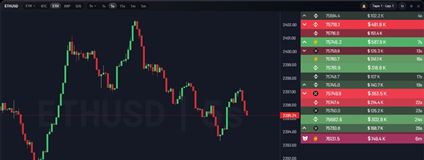
Chart
 Heatmap
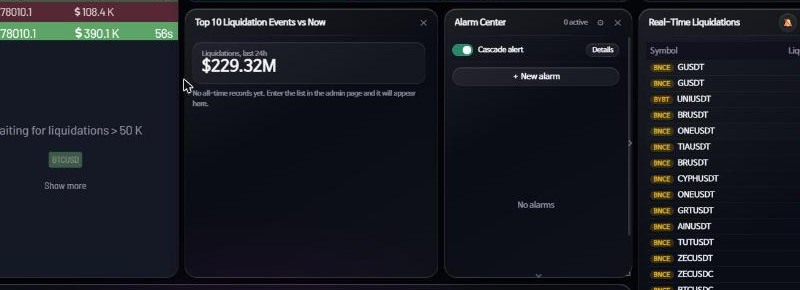
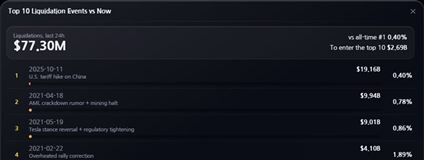 Top 10
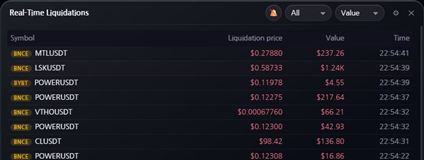 Liquidations
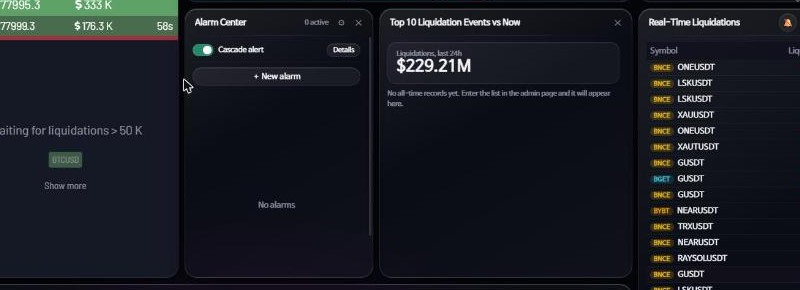
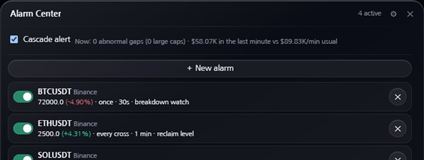 Alarms
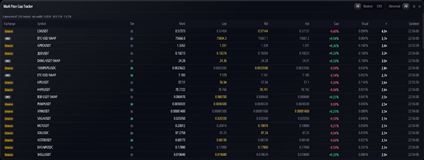 Gap tracker
Two panels trading places — the grid stays square the whole way.
The terminal is one canvas of widgets, not a fixed screen. Drag a panel into open space, pull its corner to resize, and open its own settings to change what it counts.
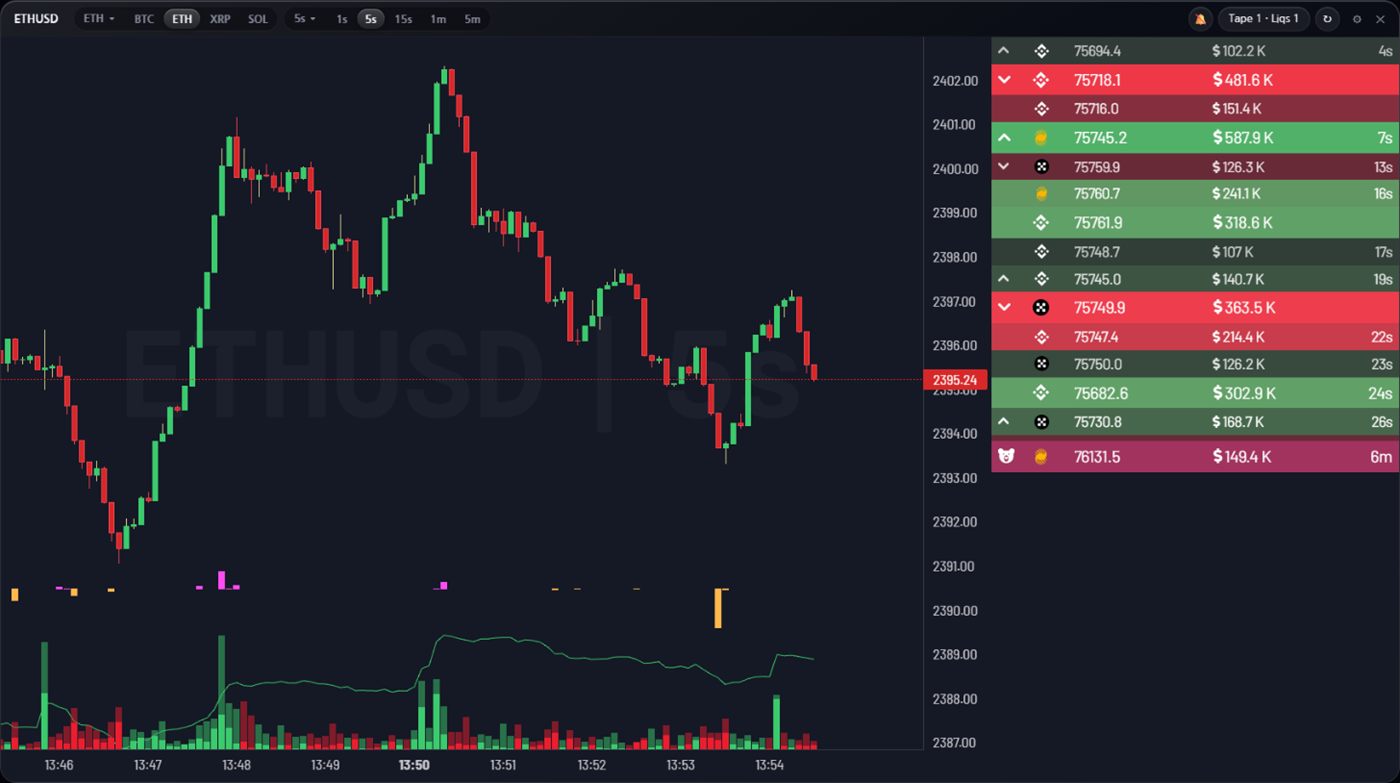
A fork of the open-source aggr chart builds candles straight from live trade streams, down to one second — the usual reason traders pay for a charting plan.
Large prints and the REKTS liquidation feed stream beside the candles, so a wick always has an explanation.
Switch symbol and timeframe from the panel header. No config files, no reload — the chart re-subscribes in place.
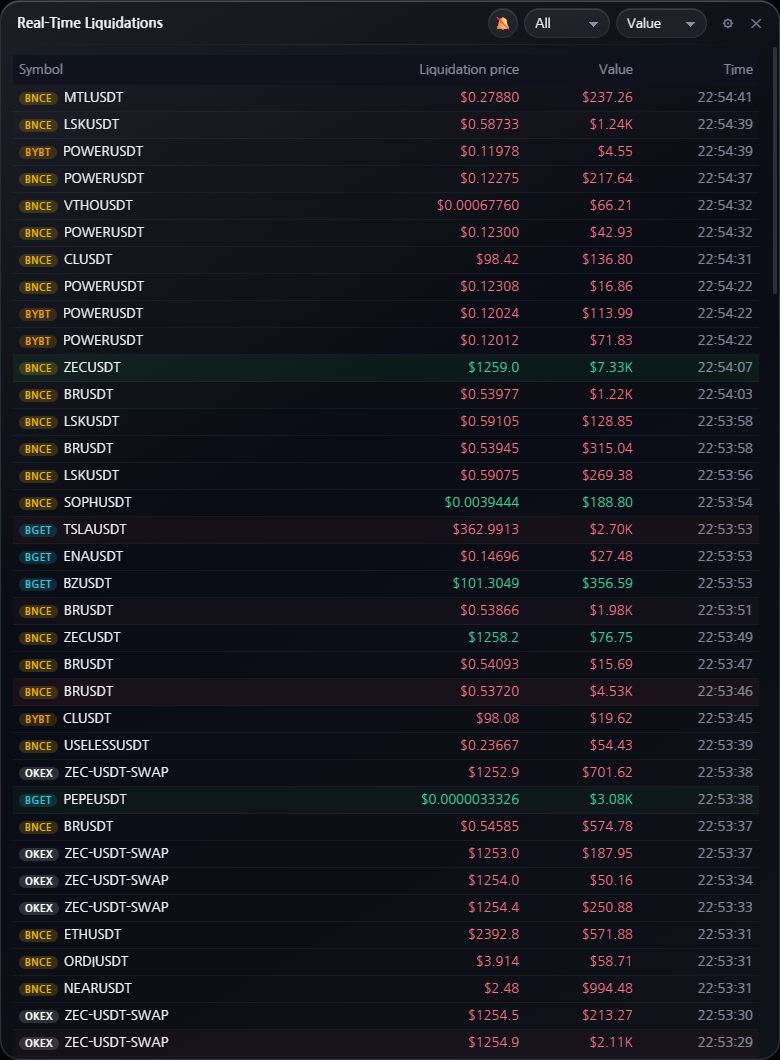
Binance, OKX, Bybit and Bitget aggregated into one real-time tape. Hyperliquid is partial today and becomes a first-class feed this quarter.
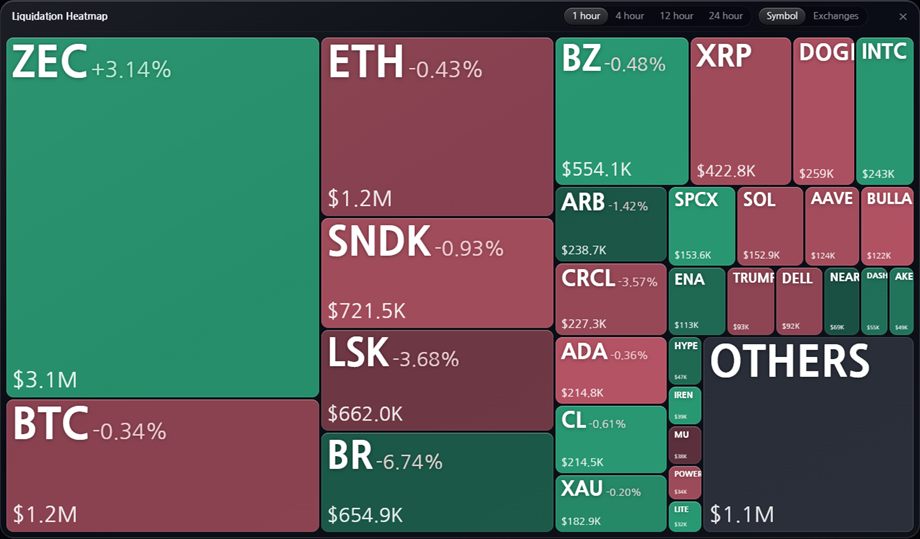
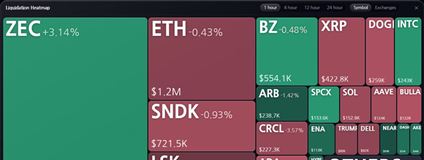
A treemap sized by liquidation volume. Long liquidations render red, short green — one glance tells you which side is being taken out.
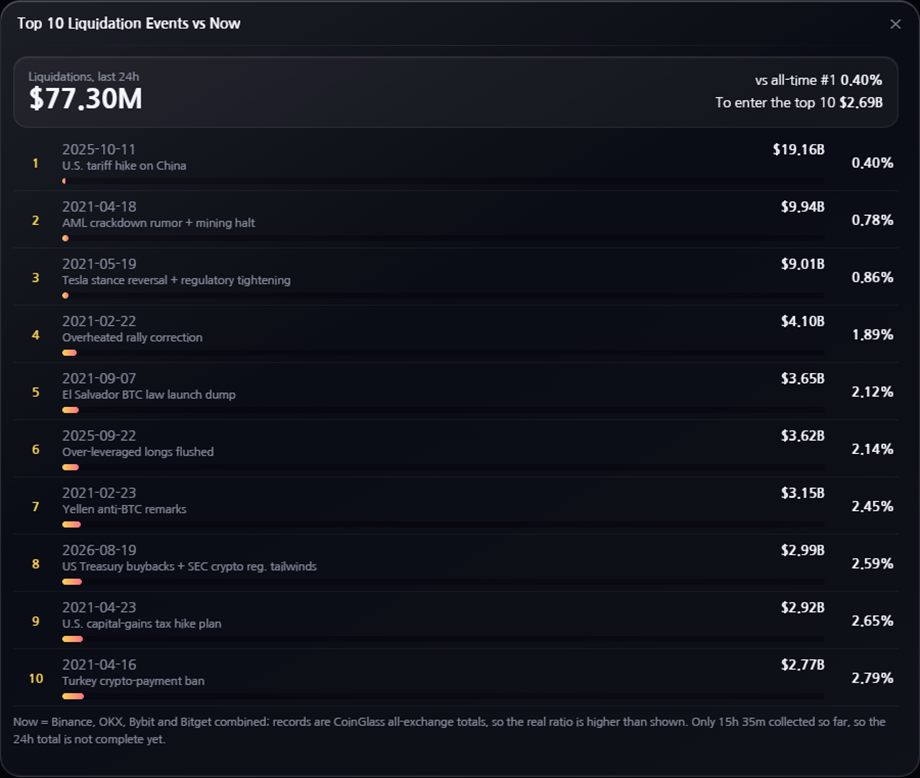
Running 24-hour liquidations are compared live against the ten largest days ever recorded, with the distance to the board shown as a figure.
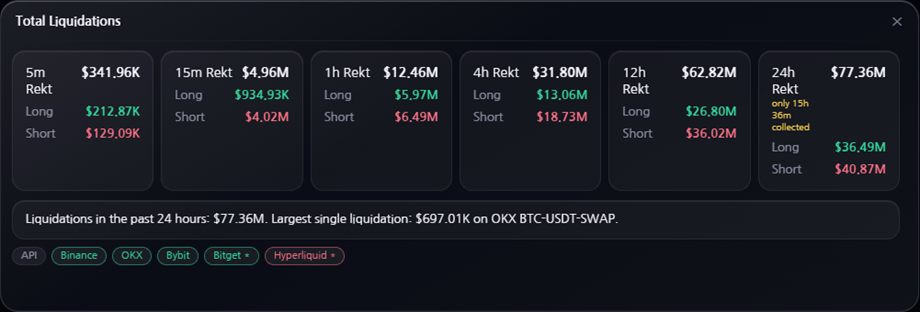
Six windows from five minutes to a full day, each split into long and short. The imbalance tells you which side is being forced.
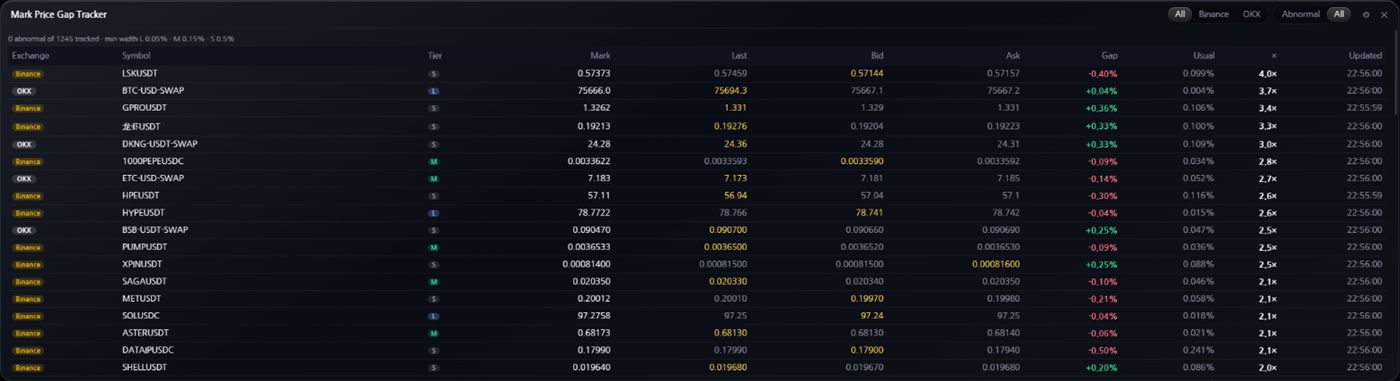
Over a thousand symbols watched for the moment price pulls away from mark. Every row carries its own usual spread, so “abnormal” means abnormal for that symbol.
We will wake you when the black swan lands.
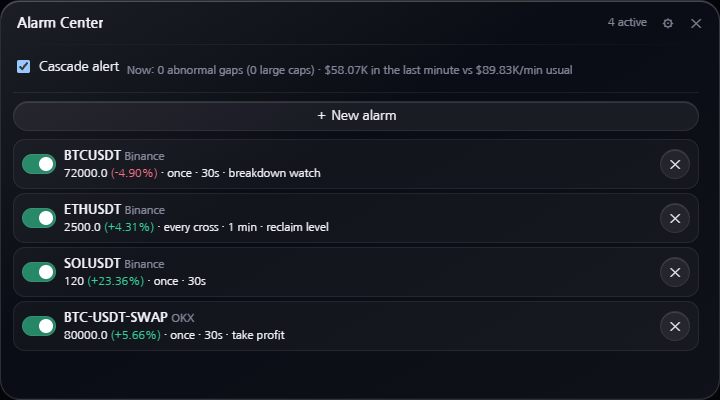
Price alarms live in the terminal itself — levels per symbol, any cross direction, with no cap counted against a plan tier.
Attach your own clips per alarm and set how long it rings. You do not have to look at the screen to know which level broke.
Price alarms fire on levels you thought of. The cascade alert fires on the one you did not — and keeps sounding until you dismiss it.
Alarms, cascade detection and the gap tracker share one screen and one sound system, so a single window is responsible for waking you.
Every panel is a widget you can move and resize freely; panels snap to the grid so the layout stays square.
Landscape, portrait and compact ship with the app. Save your own — a custom layout restores the window size too.
The full interface is available in Korean, English, Japanese and Chinese.
Export every setting, layout and uploaded sound clip in one file, and restore the whole workspace on another machine.
An Electron desktop build for Windows, an installable PWA for iPad, and the same terminal in the browser.
Why
Every other terminal charges you rent. Here the thing that unlocks the app is the same thing the business is designed to buy back.
Stake to subscribe
Share the upside
Cash paid to a SaaS vendor never comes back. $LIQTERM staked for access is locked, not spent — unstake it when you no longer need the terminal.
Creator fees and business revenue are intended to fund a vault that buys $LIQTERM from the open market and burns it. It is design intent and is not live yet.
An active subscription locks tokens out of circulation, and the lifetime tier burns them. Growth means fewer tokens available, not more.
StellarMom built this terminal to trade with, and finished #1 in ROE on Binance doing it. The token puts users on the same side as the person maintaining it.
Four groups act for their own reasons, and each one reduces sell pressure or supply for the next. Nothing here depends on altruism.
Access is granted by staking, so tokens are bought and locked rather than spent — the position is still yours. Sell pressure falls.
The lifetime tier is paid by burning. Those tokens never return to the market, so the heaviest users are the ones who permanently shrink the float. Supply is removed for good.
Half of the creator fees are earmarked to buy $LIQTERM and burn it. Because users lock rather than sell, that bid meets a thinner book. Buy pressure meets low supply.
Revenue unrelated to the token — advertising, VIP and data work — can be turned back into buybacks. The loop keeps turning without new issuance.
The flywheel describes how the mechanism is designed to behave, not what it will do. The buyback vault is planned rather than live, no fee revenue has been used for a buyback, and none of the staking or burn contracts are deployed yet.
How the contracts are designedThis was built to trade on, and it is still being traded on. Maintaining it is not a favour to customers — it is the developer keeping his own screen working. As long as StellarMom is still trading, the terminal has someone who needs it to run.
Advertising, VIP tiers and data work are ordinary business lines with nothing to do with selling tokens. A project that can earn without issuing does not have to keep issuing.
This describes how the access mechanism is designed, not an expected outcome. The buyback vault is planned rather than live, no revenue has been distributed or used for a buyback, and nothing here is a prediction about price. Holding or staking $LIQTERM is not an investment and gives you no claim on the project's revenue, equity or profits.
Limited time — bonding curve phase
$LIQTERM is still on the pons bonding curve. While that lasts, staking is not a subscription — it is an early supporter position that writes a permanent license to your wallet. And it is the lifetime tier in full: the same VIP standing comes with it.
Buy $LIQTERM on pons and stake it into the bonding curve phase contract. Your tokens stay locked until the token graduates.
When the curve completes, the contract owner sends a single release transaction and every bonding curve stake begins unlocking at once — no queue, no per-user action needed to qualify. Tokens are returned through a 7-day vesting claim.
Your permanent access stays after you unstake. The tokens are yours to hold or sell — the licence does not depend on keeping them. It carries VIP standing too: feature requests treated as proposals, first claim on support, and a direct line to the developer.
After graduation the terminal moves to the normal model: 7-day and 30-day stakes that expire, or a lifetime tier paid by burning tokens. The bonding curve phase is the only window where a stake that you can later withdraw leaves permanent access behind.
The licence this writes is not a lesser version of the lifetime tier — it is the same one. Feature requests are treated as proposals rather than tickets, support is answered first, and there is a direct hotline to the developer.
The release does not dump every stake back onto the market in one block. Your permanent licence is written immediately, while the tokens are returned through a claim that vests over the following seven days.
If the owner's release never comes, the contract still lets you withdraw your own stake without it — one year after the contract is switched on. A lost key cannot trap your tokens.
Not deployed yet. The bonding curve phase runs on its own contract, kept separate from the planned licence control contract. There is no cap on the number of early positions — the window itself is the limit, and it closes the moment the curve graduates. Nothing described here is live or guaranteed. This is a description of access mechanics, not a prediction about price.
Roadmap
The plan is to widen what these tools watch without splitting the token that unlocks them. Some of it is a separate app — but all of it runs on $LIQTERM.
Dates are targets for a project still under active development, not commitments. Scope and timing can move, and nothing here is a promise of delivery or of future value.
What is planned next, in detailOn-chain
These tiles read straight from on-chain data once the contracts are deployed. Until then they stay empty on purpose — no placeholder numbers.
Supply, chain and the curve—
Awaiting contract deployment
—
Awaiting contract deployment
—
Awaiting contract deployment
—
Awaiting contract deployment
—
Awaiting contract deployment
Access
Access is granted by staking $LIQTERM for a period, or permanently by burning it. When a stake expires, access is revoked immediately.
TBA
$LIQTERM staked
TBA
$LIQTERM staked
TBA
$LIQTERM burned
Amounts are not decided yet. Requirements are intended to adjust with market cap, so the cost of access in USD terms stays roughly stable rather than tracking the token price.
Tiers, expiry and pricingThe app reads your staking position on Robinhood Chain. An active stake unlocks the terminal; when it expires, access ends.
Unstaking on these tiers is immediate. That is not how the bonding curve phase works — that one-time window releases over seven days.
Creator fees earned on pons are intended to accrue to a buyback vault that buys $LIQTERM back from the market and burns it. This is a planned mechanism — it is not live, and no buyback or burn has taken place.
Lifetime access is the VIP tier: proposals rather than tickets, support answered first, and a direct hotline. The bonding-curve limited offer grants the same standing.
Refined data for AI agents and exchange API integration are scoped and priced after a direct conversation — contact us. None of it is implemented yet.
Open the terminal, or pick up $LIQTERM on the pons launchpad.
Team

Creator
StellarMom was the #1 ROE trader on Binance.
Those returns came from trading through sharp, high-volatility moves — the same moves this terminal is built to catch early.
Those are StellarMom's personal accounts. For the project itself, use the channels below.
Questions about access, data work or the roadmap — any of these reach the same desk.